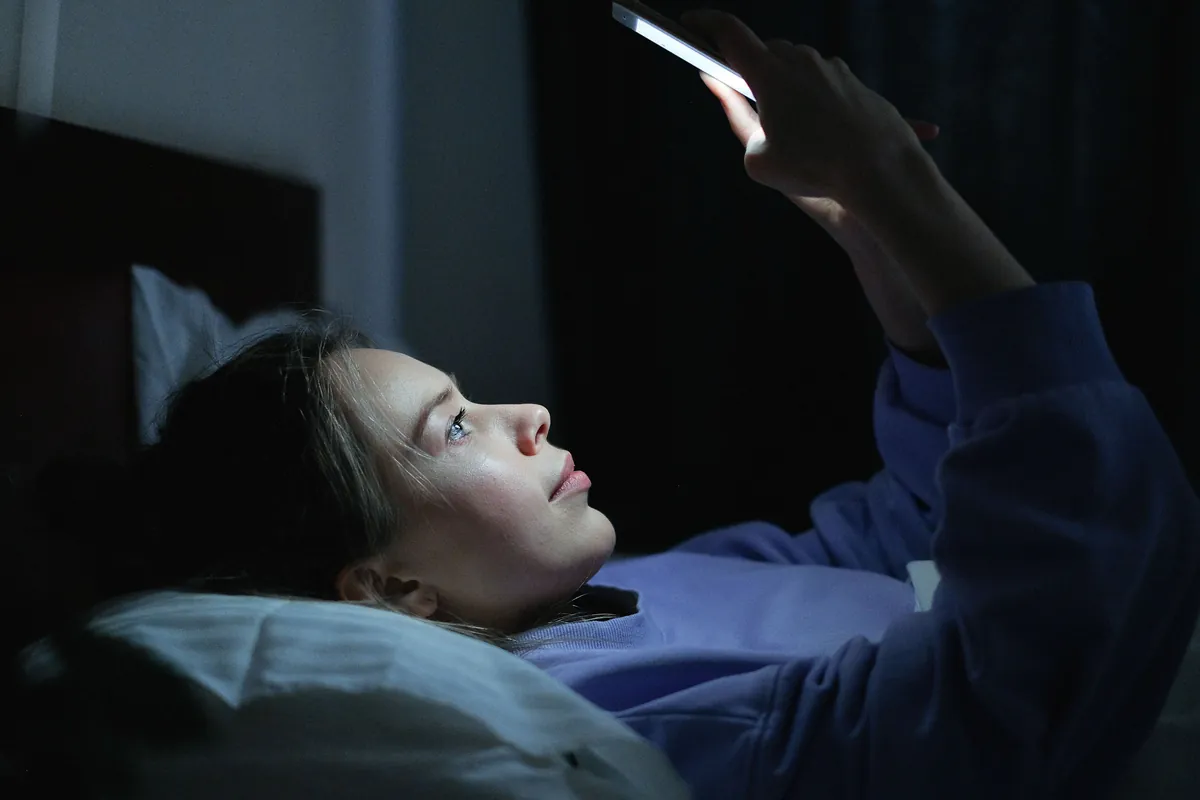
On June 15, 2026, the UK government announced what it called a world-leading measure: a ban on social media platforms offering services to children under 16. Applying to Snapchat, TikTok, YouTube, Instagram, Facebook, and X, the ban is expected to come into force in Spring 2027. Enforcement targets the platforms, not the children. The government went further than Australia, which pioneered a similar ban in 2025, adding restrictions on livestreaming, stranger communication with children, and infinite scrolling for under-18s.
The announcement was backed by 90% of parents in national consultation. Prime Minister Keir Starmer framed it as giving children back their childhoods. Tech companies, as expected, pushed back.
What does the science actually say? The honest answer, as is often the case in health research, is more nuanced than either the political narrative or the tech industry’s defence. But there are findings that hold up well, and they deserve to be presented clearly.
The Case the Government Is Strongest On: Sleep
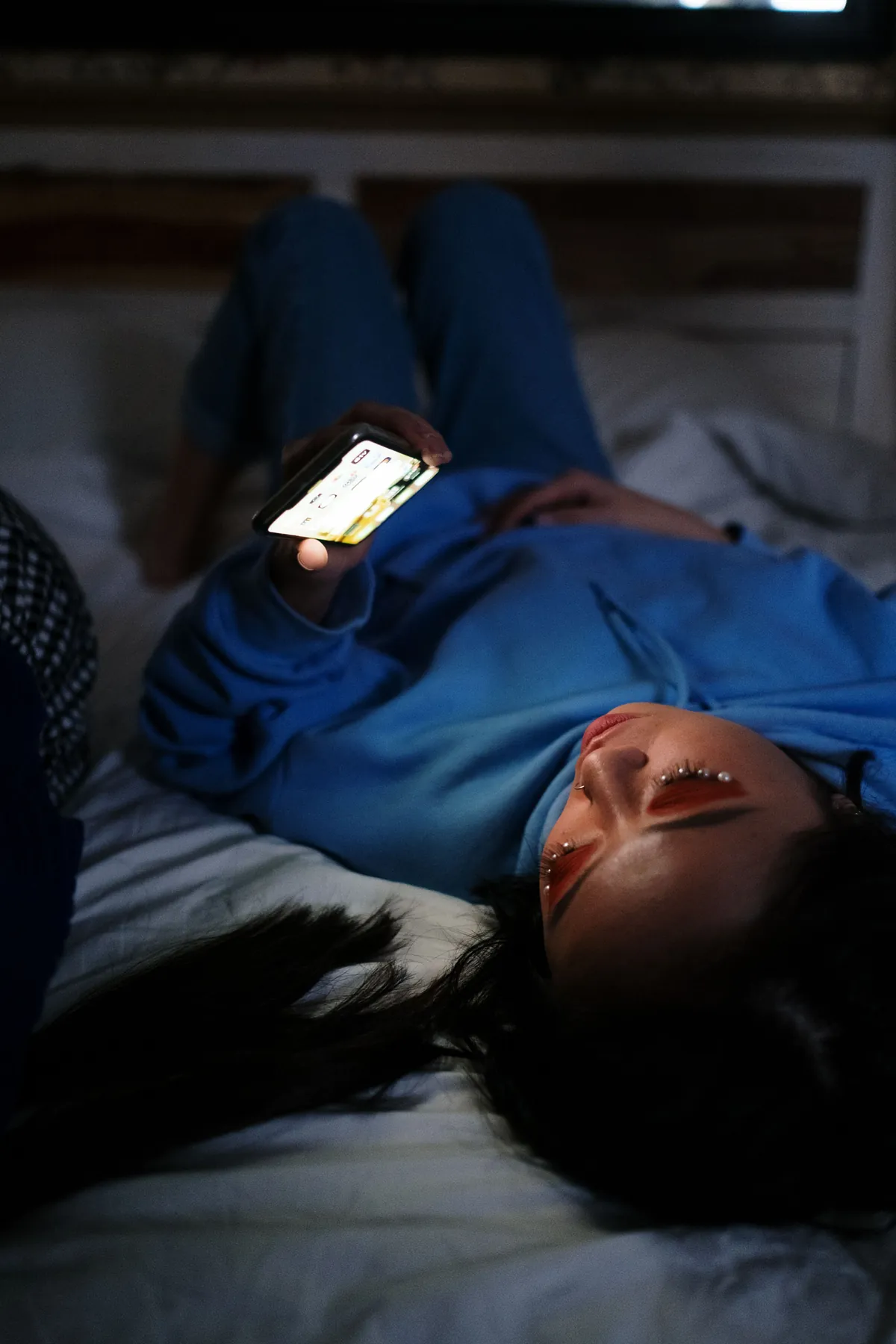
The link between social media use before bed and sleep disruption is where the evidence is most consistent, most mechanistically understood, and most clinically significant.
There are at least four distinct pathways through which bedtime social media use disrupts sleep. The first is blue light suppression of melatonin. Screens emit short-wavelength blue light that, when detected by intrinsically photosensitive retinal ganglion cells, signals the suprachiasmatic nucleus to delay melatonin onset. For adolescents, whose circadian timing is already naturally shifted later by approximately one to two hours during puberty, this delay compounds an existing vulnerability. The result is later sleep onset, reduced total sleep time, and reduced slow-wave sleep quality.
The second pathway is cognitive and emotional arousal. Social media feeds are specifically engineered to generate emotional reactions. Encountering conflict, comparison, or social anxiety in a feed at 11pm activates the hypothalamic-pituitary-adrenal axis in the same way any stressor does, raising cortisol and delaying sleep onset independent of the light exposure.
The third is behavioural displacement. Unlike television, which ends episodes, or books, which can be put down, social media has no natural endpoint. The infinite scroll is a design choice, not an accident, and it is particularly effective at displacing the scheduled bedtimes that adolescents need for adequate sleep duration.
The fourth is notification-driven interruption. Adolescents who sleep with their phones in their bedrooms are frequently woken during the night by incoming messages. Even brief awakenings during slow-wave sleep stages fragment the restorative architecture of the night and impair next-day cognitive function.
A 2017 nationally representative study of young adults in the United States found that those who used social media the most were three times more likely to experience sleep disturbances compared to those who used it least. Critically, the bedtime use window was more predictive than total daily use, suggesting that when social media is used matters more than how much.
The consequences of this sleep disruption are not trivial. Adolescents need 8 to 10 hours of sleep per night. Chronic restriction to 6 to 7 hours produces measurable deficits in memory consolidation, emotional regulation, immune function, and metabolic health that accumulate over weeks and months. A generation of adolescents with structurally disrupted sleep is a generation with impaired cognitive development, and social media at night is a primary driver of that disruption.
References:
- Levenson JC, Shensa A, Sidani JE, Colditz JB, Primack BA. (2017). Social media use before bed and sleep disturbance among young adults in the United States: a nationally representative study. Sleep, 40(9), zsx113. PubMed
- Lund L, et al. (2021). Electronic media use and sleep in children and adolescents in western countries: a systematic review. BMC Public Health, 21, 1598. PubMed
Social Comparison, Self-Esteem, and the Female Adolescent Risk

One of the more consistent patterns in the social media and mental health literature is that effects are stronger for girls than for boys, and stronger for heavy or “problematic” users than for moderate users.
The proposed mechanism for the gender disparity involves social comparison processes. Adolescent girls are more susceptible to appearance-based and status-based social comparison, and social media platforms are particularly effective at generating it. Curated image feeds on Instagram, follower counts on TikTok, and reaction metrics on all platforms create a quantified social hierarchy that is highly salient during a developmental period when peer status and social belonging are primary motivators.
Upward social comparison, comparing oneself negatively to peers perceived as more attractive, more socially successful, or more accomplished, has well-documented effects on self-esteem and mood in experimental studies. The question is whether the dose delivered by daily social media use is sufficient to produce lasting harm, and here the evidence is more disputed.
What is clear is that problematic social media use, characterised by loss of control, tolerance, preoccupation, and negative consequences similar to behavioural addiction criteria, is associated with meaningfully worse mental health outcomes. The debate is whether average use by the majority of adolescents, as opposed to heavy or compulsive use, produces significant harm. Multiple meta-analyses and longitudinal studies have found effects that are statistically significant but small in magnitude.
The Mental Health Debate: What Is Established and What Is Not
This is where intellectual honesty requires separating the political narrative from the research consensus.
Jonathan Haidt’s 2024 book The Anxious Generation argues powerfully that the rise of smartphones and social media after 2012 causally drove the documented increase in adolescent depression, anxiety, and self-harm rates, particularly in girls. His argument draws on a striking temporal correlation: rates of adolescent mental health problems rose sharply in precisely the years when social media became ubiquitous.
The counterargument, developed rigorously by researchers like Amy Orben and Andrew Przybylski at Oxford, is that temporal correlation is not causation, and that when effect sizes are calculated carefully, the association between social media use and adolescent wellbeing is comparable in magnitude to the association with wearing glasses or eating potatoes. That is not a dismissal; it is an empirical finding that the effect, while present, may be far smaller than the public narrative suggests.
Longitudinal studies, which follow the same adolescents over time and are therefore better placed to detect causal effects, have generally shown weaker associations than cross-sectional studies taken at a single point in time. A longitudinal analysis of 3,228 UK adolescents from the UK Household Study found little evidence that more hours spent on social media at age 12 to 13 predicted worse mental health at age 14 to 15, after accounting for confounders. This does not mean social media is harmless; it means the relationship is more complex than a simple dose-response.
The most honest summary of the current evidence: the harms are real, they are clearest for heavy and problematic users, they are more consistent for girls during early adolescence, they operate most clearly through sleep disruption and social comparison processes, and the causal evidence for average users is weaker than the political debate implies but stronger than the technology industry would prefer.
References:
- Plackett R, Sheringham J, Dykxhoorn J. (2023). The longitudinal impact of social media use on UK adolescents’ mental health: longitudinal observational study. Journal of Medical Internet Research, 25, e43213. PubMed
- Twenge JM, Haidt J, Lozano J, Cummins KM. (2022). Specification curve analysis shows that social media use is linked to poor mental health, especially among girls. Acta Psychologica, 224, 103512. PubMed
What About Boys?

The discussion so far has focused heavily on girls, and for good reason: the strongest, most consistent evidence for social media harm specifically concerns adolescent girls. But this creates an incomplete picture if it leaves the impression that boys are simply unaffected.
The pattern for boys looks different rather than absent. Boys spend substantially more time gaming than on social networking platforms, and the harms research has identified for boys cluster around problematic gaming rather than appearance-based social comparison. A systematic review and meta-analysis found that gaming disorder rates run roughly two and a half times higher in males than in females, and the associated risks for boys skew toward externalizing problems, impulsivity, aggression, and academic decline, rather than the depression and anxiety more characteristic of girls’ difficulties with social media specifically.
This matters for how the UK ban is likely to play out in practice. The legislation targets social media platforms by name, the category where girls’ risk concentrates, while gaming platforms and livestreaming services that capture much of boys’ problematic engagement occupy a more ambiguous position, though the UK ban does include some livestreaming restrictions. A policy response calibrated primarily around the female adolescent risk profile may underaddress the specific pathway through which a meaningful proportion of boys develop problematic technology use. Effective intervention for boys likely requires attention to gaming time limits, in-game monetization design (loot boxes and similar mechanics function through the same variable reward principles discussed earlier), and the social isolation that sometimes accompanies heavy gaming, rather than a framework built primarily around image-based social comparison.
References:
- Stevens MWR, Dorstyn D, Delfabbro PH, King DL. (2021). Global prevalence of gaming disorder: a systematic review and meta-analysis. Australian & New Zealand Journal of Psychiatry, 55(6), 553-568. PubMed
Why the Adolescent Brain Is Specifically Vulnerable
The argument for age-based restrictions, as opposed to general restrictions, has a grounding in developmental neuroscience that deserves attention.
The prefrontal cortex, the brain region responsible for executive function, impulse control, risk assessment, and the ability to prioritise long-term consequences over immediate rewards, does not reach full development until the mid-20s. During adolescence, the brain is in a state of heightened plasticity and heightened sensitivity to social reward signals, a combination that makes social media particularly potent as a behavioural driver.
Dopaminergic reward circuits are more reactive during adolescence than at any other life stage. Likes, shares, and follower growth trigger dopamine release in the nucleus accumbens in ways that are amplified compared to adults. Platforms designed to maximise engagement exploit this neurological reality. The variable reward schedule, the uncertainty about whether the next scroll will bring a like, a notification, or an interesting video, is the same mechanism that makes slot machines addictive. The adolescent brain is not simply a smaller adult brain. It is a brain at a specific developmental stage where the reward system is highly active and the regulatory systems that normally moderate it are still forming.
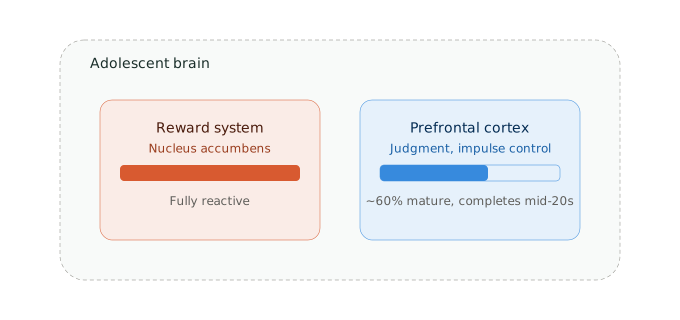
Orben, Dienlin, and Przybylski published a 2022 analysis in Nature Communications identifying windows of developmental sensitivity to social media, finding that associations between social media use and life satisfaction were stronger and more consistent at specific ages during adolescence than at others. This suggests that the concern is not simply about total exposure but about exposure at developmentally sensitive periods.
References:
- Orben A, Przybylski AK, Blakemore SJ, Kievit RA. (2022). Windows of developmental sensitivity to social media. Nature Communications, 13, 1649. PubMed
Cyberbullying: The Clearest Direct Harm
One area where the evidence is less contested is cyberbullying. The digitalisation of social life has not reduced bullying; it has extended it beyond school hours, beyond school grounds, and into the bedroom. Victims of cyberbullying cannot escape by going home.
Meta-analyses consistently show significant associations between cyberbullying victimisation and depression, anxiety, self-harm, and suicidal ideation, with effect sizes substantially larger than those found for general social media use. Unlike the general social media and mental health relationship, the cyberbullying pathway does not rely on small observational effects. The harm from being repeatedly targeted, humiliated, or excluded online by peers is direct and well-documented.
This pathway alone provides a strong argument for protective measures targeted at younger adolescents, who have less developed coping capacities and are less equipped to contextualise or detach from online social dynamics.
The Counterarguments to the Ban
An honest treatment requires acknowledging what the critics of the ban are raising.
The first concern is enforcement. Australia’s ban, the model the UK is following, has faced significant enforcement challenges. Age verification that is robust enough to exclude 15-year-olds while not imposing excessive privacy burdens on adults is technically and legally complex. There is real risk that the ban creates a parallel, less visible underground social media ecosystem without eliminating exposure. Determined teenagers have historically found workarounds to age restrictions on alcohol, tobacco, and other regulated products, and there is no strong reason to assume digital age verification will prove categorically more effective than those precedents suggest.
The second concern is social media’s genuinely positive functions for certain vulnerable populations. For isolated adolescents, including those in rural areas, LGBTQ+ youth without local community, and young people with chronic illness, social media provides genuine connection, identity affirmation, and access to support that would otherwise be entirely inaccessible to them. A blanket ban removes these benefits alongside the harms.
The third concern is displacement effects. Children who cannot use regulated, moderated social media platforms will likely shift toward less moderated alternatives instead. Regulation that drives behaviour into darker corners of the internet may not represent net improvement.
These are real and legitimate concerns, and they explain why some researchers who take the documented harms seriously nonetheless oppose a blunt age ban rather than targeted platform regulation focused specifically on the most harmful design features: infinite scroll, algorithmic amplification of emotional content, and notification systems specifically designed to interrupt sleep.
What This Means Practically
Regardless of where one lands on the policy debate, the biomedical evidence points toward some clear practical conclusions.
The bedtime window is the most important intervention point. Whatever total daily use is occurring, removing social media from the bedroom environment in the hour before sleep eliminates the most well-documented biological harm pathway. This does not require a government ban. It requires a household rule and, ideally, a phone charger in a room other than the bedroom.
The age of first consistent use matters. The evidence for developmental sensitivity during early adolescence, particularly between ages 10 and 14, is stronger than for older adolescents. Delay of first exposure is not the same as denial; it is a developmental calculation about when a brain is better equipped to manage the reward and comparison dynamics these platforms are designed to produce.
Heavy and problematic use is categorically different from moderate use. The evidence of harm is substantially stronger for adolescents in the top quartile of usage. Parental awareness of use patterns, not just nominal screen time limits, is what matters here.
The Bottom Line
Social media is not categorically harmful for all users in the way that, say, cigarettes are harmful for all users. The science does not support that framing. But it is a category of product that is specifically engineered to maximise engagement through mechanisms that are particularly potent during adolescence, that consistently disrupts sleep through well-characterised biological pathways, and that creates conditions for social comparison and cyberbullying that have real consequences for a meaningful proportion of young people.
Whether a government age ban is the right policy response depends on values, enforcement practicalities, and trade-offs that go beyond the science. But the scientific case that the current situation warrants serious intervention, particularly focused on the bedtime use window and the early adolescent years, is stronger than the technology industry’s lobbying suggests and more nuanced than the political debate implies.
The UK government has made a decision. The evidence it is based on is real, even if the causal picture is not as simple as the headline suggests.
References:
- Orben A, Przybylski AK. (2019). The association between adolescent well-being and digital technology use. Nature Human Behaviour, 3(2), 173-182. PubMed
- Alonzo R, Hussain J, Stranges S, Anderson KK. (2021). Interplay between social media use, sleep quality, and mental health in youth: a systematic review. Sleep Medicine Reviews, 56, 101414. PubMed
Have a question or a topic you would like covered? Leave a comment below or get in touch.