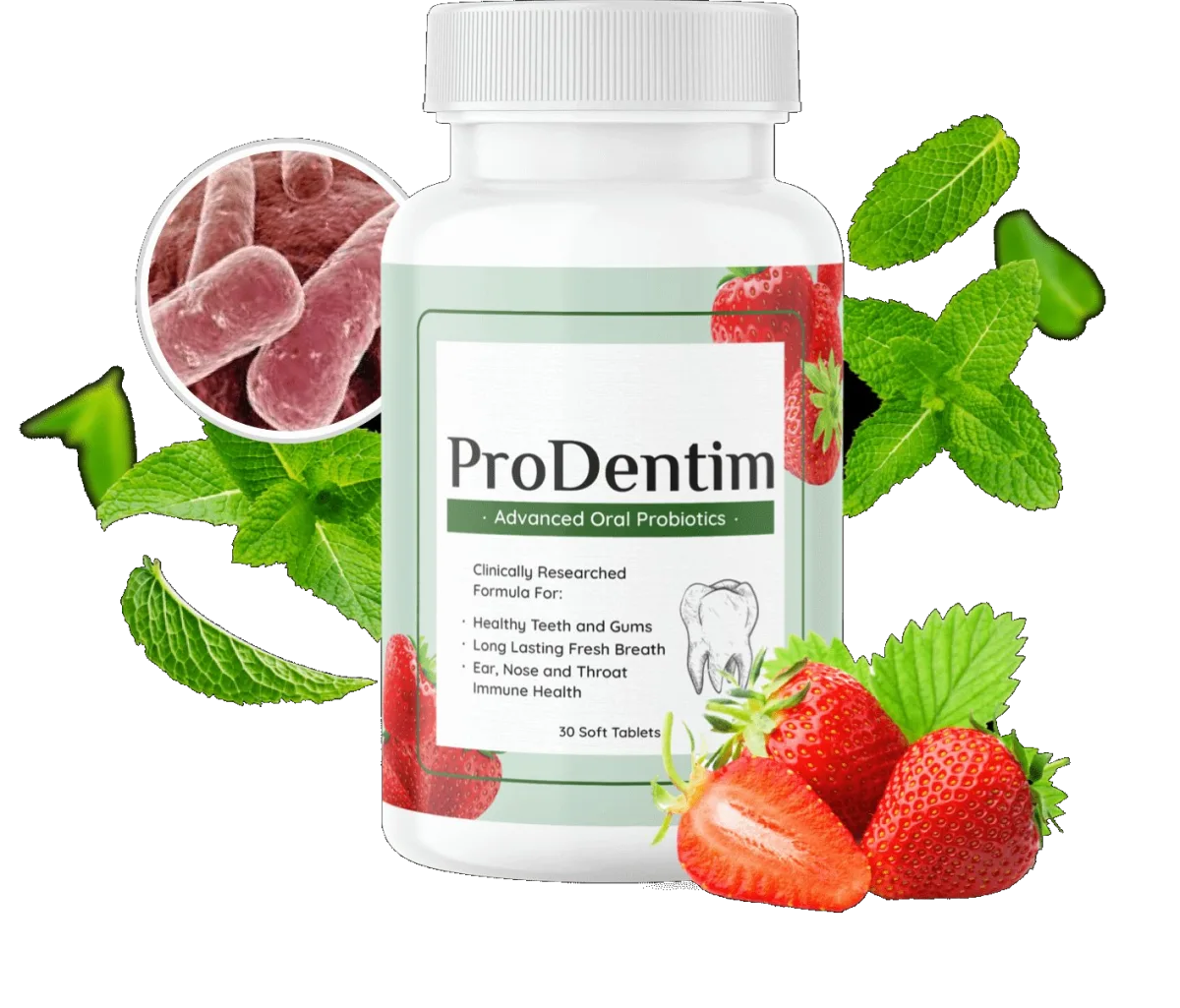
ProDentim has been circulating widely across health forums and supplement review sites, generating enough interest that a closer look at the actual science seemed worthwhile. The concept behind it, supporting oral health through beneficial bacteria rather than just chemical agents, is grounded in real and growing research. The question worth asking is whether this specific formula delivers on that premise.
This review goes strain by strain through the published clinical evidence, checks the specific claims against what the underlying studies actually found, and gives an honest picture of who this product is likely to help.
The Science Behind Oral Probiotics
Most oral hygiene products work by trying to eliminate bacteria indiscriminately. Mouthwashes, antiseptic rinses, and many toothpaste ingredients are designed to reduce bacterial load across the board. The problem with this approach is that the mouth, like the gut, hosts a complex microbial ecosystem where beneficial bacteria play essential roles.

Oral dysbiosis, the disruption of this microbial balance, is now recognized as a central driver of periodontal disease, dental caries, and persistent bad breath. More significantly, a 2024 review published in Medicina confirmed that periodontal dysbiosis has systemic implications, with periodontal pathogens linked via hematogenous routes to cardiovascular disease, diabetes, and inflammatory conditions elsewhere in the body.
Oral probiotics take a different approach: instead of eliminating bacteria, they introduce beneficial strains that compete with pathogenic species, support healthy gum tissue, and help restore the microbial balance that chemical agents tend to disrupt.
The mechanisms behind two of the most common complaints, bad breath and cavities, illustrate why this distinction matters. Persistent bad breath is primarily caused by volatile sulfur compounds, including hydrogen sulfide and methyl mercaptan, produced when anaerobic bacteria break down sulfur-containing amino acids on the tongue and below the gumline. Mouthwash temporarily reduces the bacterial population producing these compounds, but bacterial counts rebound within hours, which is why the effect is so short-lived. A probiotic strategy that durably shifts the balance toward non-odor-producing species addresses the underlying population dynamics rather than temporarily suppressing the symptom.
Dental caries follow a similar logic. Streptococcus mutans metabolizes dietary sugars into lactic acid, which demineralizes tooth enamel over repeated acid exposures throughout the day. Antiseptic rinses reduce S. mutans counts broadly, but they do not selectively favor the non-cariogenic species that would otherwise occupy that ecological niche. Introducing strains that competitively exclude S. mutans, rather than simply killing bacteria indiscriminately, is the more sustainable long-term strategy that this category of product is built around.

The Oral-Systemic Connection
The mouth is not a closed system. The oral cavity connects directly to the bloodstream through the gingival sulcus, the small space between tooth and gum, and through inflamed or bleeding gum tissue this connection becomes a two-way gate.
When periodontal pathogens like Porphyromonas gingivalis enter the bloodstream through inflamed gum tissue, they trigger systemic immune responses. A 2024 narrative review in Medicina examined this hematogenous spread in detail, documenting how periodontal pathogens and the chronic inflammation they generate are mechanistically linked to cardiovascular disease, type 2 diabetes, and gastrointestinal conditions, including a documented association with gastrointestinal cancer risk.
This is part of why dentists increasingly describe oral health as a window into systemic health rather than an isolated concern. The same chronic low-grade inflammation that drives periodontal tissue destruction also contributes to endothelial dysfunction in blood vessels elsewhere in the body. People managing cardiovascular risk factors or diabetes have a genuine clinical reason to take gum inflammation seriously beyond cosmetic or comfort concerns.
This context matters for evaluating oral probiotics specifically. If the formula meaningfully reduces the pathogenic load and inflammatory burden at the gumline, the benefit is not confined to the mouth. It is one of the more compelling arguments for oral probiotics as a category, separate from whether any individual product delivers on it.
What Is ProDentim
ProDentim is an oral probiotic supplement in soft tablet form, with 3.5 billion colony-forming units (CFU) per tablet. It is designed to dissolve slowly in the mouth, allowing the probiotic strains to colonize oral surfaces rather than simply passing through the digestive system. The formula is manufactured in an FDA-registered, GMP-certified facility in the United States and is non-GMO, gluten-free, and stimulant-free.
The 3.5 billion CFU figure is worth noting on its own merits, since it falls within a range comparable to the doses used in several of the strain-specific clinical trials referenced later in this review. This is a meaningfully more transparent labeling practice than many supplement formulas that disclose only a proprietary blend total without a CFU count at all, and it gives a buyer an actual number to compare against the published research rather than having to take the formulation on faith.

Ingredient Analysis

Lactobacillus paracasei Good Evidence
One of the most studied Lactobacillus strains for oral health applications. A 2024 randomized, double-blind, crossover, placebo-controlled trial published in BMC Oral Health found that L. paracasei GMNL-143 toothpaste significantly lowered the gingival index and reduced Streptococcus mutans in crevicular fluid in gingivitis patients over four weeks. The strain shows documented ability to coaggregate with oral pathogens, physically displacing them from tooth surfaces. Multiple studies confirm its role in reducing cariogenic bacteria and supporting gum health through competitive exclusion mechanisms.
Lactobacillus reuteri Good Evidence
L. reuteri has one of the stronger evidence bases among oral probiotics for periodontal and gingival applications. A 2025 randomized, double-blind, placebo-controlled trial published in Oral Health and Preventive Dentistry involving 120 patients with periodontitis and gingivitis found that L. reuteri produced significant reductions in inflammatory markers, including a 45% drop in TNF-alpha, after just 8 weeks of supplementation compared to placebo. A 2024 study published in Journal of Periodontal Research confirmed L. reuteri's role in promoting periodontal tissue regeneration through reuterin, an active antimicrobial compound it produces. An earlier RCT published in the Journal of Clinical Periodontology found L. reuteri tablets reduced counts of Porphyromonas gingivalis, a key periodontal pathogen, in subgingival microbiota.
BLIS K12 (Streptococcus salivarius K12) Good Evidence
BLIS K12 is one of the most specifically oral-focused probiotic strains available. It is a naturally occurring commensal of the healthy oral cavity that produces bacteriocin-like inhibitory substances (BLIS) targeting streptococcal pathogens, halitosis-producing bacteria, and ENT pathogens. A 2024 randomized controlled trial found S. salivarius K12 significantly reduced the occurrence of upper respiratory tract infections in adults. A 2023 study published in Oral Health and Preventive Dentistry demonstrated in vitro suppression of volatile sulfur compounds (the primary cause of bad breath) by S. salivarius K12. Its dual role in oral and ENT immunity makes it a particularly relevant inclusion for a formula targeting comprehensive oral health.
Bifidobacterium lactis BL-04 Moderate Evidence
B. lactis BL-04 is primarily known for immune system modulation and respiratory health support. Its inclusion here reflects evidence that oral and systemic immunity are interconnected, and that probiotic support of the broader immune system contributes to oral health outcomes. Research supports its role in reducing the frequency and duration of upper respiratory infections, which often begin with pathogenic colonization of the oral and pharyngeal cavity. The rationale for including a strain better known for respiratory than dental benefits is that the oral cavity functions as the entry point for the upper respiratory tract, so a strain that helps regulate immune response at that entry point has a plausible, if indirect, connection to the formula's broader oral health goals, even though its primary evidence base sits outside dentistry specifically.
Inulin (Prebiotic Fiber) Moderate Evidence
Inulin functions as a prebiotic, a substrate that selectively feeds beneficial bacteria. In the oral context, it supports the growth and persistence of the probiotic strains delivered in each tablet, extending their activity beyond the immediate dissolution period. Prebiotic-probiotic combinations consistently outperform probiotics alone in colonization studies, largely because introducing live bacteria without a food source for them to establish on produces a more transient effect. Pairing inulin with the probiotic strains in this formula is a sound formulation decision that mirrors the same prebiotic-probiotic pairing strategy used in well-designed gut health supplements.
Malic Acid (from Strawberry) Supportive
Malic acid is a naturally occurring organic acid with documented tooth-whitening properties and antimicrobial activity against specific oral pathogens. It contributes to surface stain management while supporting the mild acidic environment that some beneficial oral bacteria prefer. This ingredient functions more as a supporting and flavoring component than a primary active, and its inclusion should be understood as a minor cosmetic and palatability addition rather than a significant driver of the formula's clinical effects.

References:
- Lee MK, Chen IH, Hsu IL, Tsai WH, et al. (2024). The impact of Lacticaseibacillus paracasei GMNL-143 toothpaste on gingivitis and oral microbiota in adults: a randomized, double-blind, crossover, placebo-controlled trial. BMC Oral Health, 24(1), 477. PubMed
- Lu J, He X, Du T, Fu D. (2025). Clinical effects of Lactobacillus reuteri on gingival inflammation and alveolar bone loss in periodontitis. Oral Health and Preventive Dentistry. PMC
- Han N, Liu Y, Li X, Du J, Guo L, Liu Y. (2024). Reuterin isolated from Lactobacillus reuteri promotes periodontal tissue regeneration by inhibiting Cx43-mediated intercellular transmission of endoplasmic reticulum stress. Journal of Periodontal Research, 59(3), 552-564. PubMed
- Iniesta M, Herrera D, Montero E, et al. (2012). Probiotic effects of orally administered Lactobacillus reuteri-containing tablets on the subgingival and salivary microbiota in patients with gingivitis. Journal of Clinical Periodontology, 39(8), 736-744. PubMed
- Bertuccioli A, Gervasi M, Annibalini G, et al. (2024). Efficacy of Streptococcus salivarius BLIS K12 in the prevention of upper respiratory tract infections in physically active individuals: a randomized controlled trial. PubMed
- Park JA, Lee GR, Lee JY, Jin BH. (2023). Oral probiotics Streptococcus salivarius K12 and M18 suppress the release of volatile sulfur compounds and a virulent protease from oral bacteria. Oral Health and Preventive Dentistry. PMC
- Sulaiman Y, Pacauskienė IM, Šadzevičienė R, Anuzyte R. (2024). Oral and gut microbiota dysbiosis due to periodontitis: systemic implications and links to gastrointestinal cancer. Medicina, 60(9), 1416. PMC
How Long Before You Notice Anything
The clinical trials cited in this review give a genuine, evidence-based timeline rather than a marketing estimate. The L. paracasei toothpaste trial measured a significant reduction in gingival index and Streptococcus mutans at four weeks. The L. reuteri trial measuring inflammatory markers found significant reductions at eight weeks, with the dramatic 45% drop in TNF-alpha reported at that endpoint rather than earlier in the study.
This points to a practical takeaway: bad breath improvement, which depends largely on shifting the bacterial population producing volatile sulfur compounds, can plausibly show up within the first one to two weeks of consistent use, since bacterial population shifts at the surface level happen relatively quickly. Gum inflammation markers, which reflect a deeper and slower-moving immune process, are more realistically expected on the four to eight-week timeline the underlying trials actually used. Expecting a meaningful change in gum health within the first few days is not consistent with how the supporting research was designed or what it measured.
This timeline also explains why the 60-day money-back guarantee on this product is reasonably well calibrated. Sixty days covers the eight-week mark where the most clinically meaningful periodontal improvements were documented in the cited L. reuteri trial, giving a genuine window to evaluate the product rather than a guarantee period set arbitrarily short of when results would plausibly appear.
Who Benefits Most

ProDentim is most appropriate for people who experience persistent bad breath despite regular brushing, recurring gum sensitivity or mild inflammation, frequent mouth discomfort or oral infections, or those who have taken antibiotics that disrupted their oral microbiome and want to support its recovery.
People who get frequent upper respiratory infections may also see a relevant secondary benefit, given the documented role of BLIS K12 in supporting mucosal immunity in the oropharyngeal region. This is a reasonable expectation grounded in the clinical literature on this specific strain, not a generic immune-support claim.
It is not a replacement for dental care. Cavities, advanced gum disease, and structural dental problems require professional intervention. And like all probiotics, strain specificity matters: the strains in this formula have real oral-specific research behind them, but no supplement works identically for everyone. Individual variation in baseline oral microbiome composition means some people will see a clearer response than others.
The slow-dissolving tablet format is relevant here. Most oral probiotics swallowed as capsules pass through the digestive system before the bacteria can colonize oral surfaces, with most of the bacterial population dying in stomach acid before reaching anywhere useful. The tablet format allows direct contact with the oral mucosa, which is the intended site of action, giving the strains a genuine opportunity to adhere and compete for space before being swallowed.
People currently using strong antiseptic mouthwashes daily should be aware of a relevant interaction: broad-spectrum antimicrobial rinses used immediately before or after taking an oral probiotic can kill the beneficial strains before they have a chance to colonize. Separating use by at least 30 minutes preserves the intended effect.
Pricing and Guarantee
ProDentim is sold exclusively through the official website. Multi-bottle bundles offer meaningful per-unit savings and are the practical choice given that probiotic colonization effects are cumulative over weeks of consistent use. Most of the clinical trials cited in this review measured outcomes at the 4 to 12-week mark, which is a reasonable benchmark for when to expect a noticeable difference, not a guarantee of results within days.

🦷 ProDentim combines clinically studied oral probiotic strains including L. paracasei, L. reuteri, and BLIS K12 in a slow-dissolving tablet format designed for direct oral colonization, with a 60-day money-back guarantee.
Get ProDentim (Official Site) →Frequently Asked Questions
Can I use mouthwash on the same day as ProDentim? Yes, but separate the two by at least 30 minutes. Strong antiseptic mouthwashes can kill the beneficial bacterial strains before they have a chance to colonize oral surfaces.
Will it interact with any medications? There is no documented major interaction between oral probiotics and common medications, but anyone with a weakened immune system or taking immunosuppressants should check with a doctor before starting any new probiotic.
Can children use ProDentim? This formula is developed and dosed for adult use. Consult a pediatric dentist before giving any adult oral probiotic supplement to a child.
Should I still use regular toothpaste and floss? Yes. ProDentim is designed as a complement to standard oral hygiene, not a replacement for brushing, flossing, and regular dental checkups.
How long does one tablet’s effect last in the mouth? The slow-dissolving format is designed to maximize contact time during dissolution, typically several minutes, after which normal saliva flow and swallowing continue the process. This is why allowing the tablet to dissolve fully, rather than chewing and swallowing quickly, matters for the intended mechanism.
Honest Assessment
Biomedical Assessment
The oral probiotic concept is scientifically sound and increasingly supported by clinical evidence. The specific strains in ProDentim, particularly L. paracasei, L. reuteri, and BLIS K12, each have peer-reviewed clinical data supporting their roles in reducing oral pathogens, improving gum health, and managing bad breath. The tablet delivery format is a meaningful advantage over capsule-based oral probiotics. The formula is legitimate and the science behind it is real. That said, oral probiotics work best as part of a consistent hygiene routine, not as a substitute for it. Results are gradual and cumulative, and as with all probiotics, individual response varies. The 60-day guarantee makes it a reasonable product to evaluate without significant financial risk.
The disclosed 3.5 billion CFU figure deserves credit as a transparency practice that not every competitor in this category follows, and it gives a buyer something concrete to evaluate rather than a vague proprietary blend claim. The strongest evidence in this formula sits with the three headline strains. Bifidobacterium lactis, inulin, and malic acid are reasonable supporting additions rather than primary drivers of the formula's clinical case, and a buyer should weigh the product mainly on the strength of L. paracasei, L. reuteri, and BLIS K12 rather than the full ingredient count.
Affiliate disclosure: links in this post may earn me a commission at no cost to you. I only feature products I consider worth your attention based on their formulation and the available scientific evidence.
This post is for informational purposes only and does not constitute medical advice. Always consult a qualified healthcare professional before starting any new supplement, particularly if you have underlying conditions or take medications.