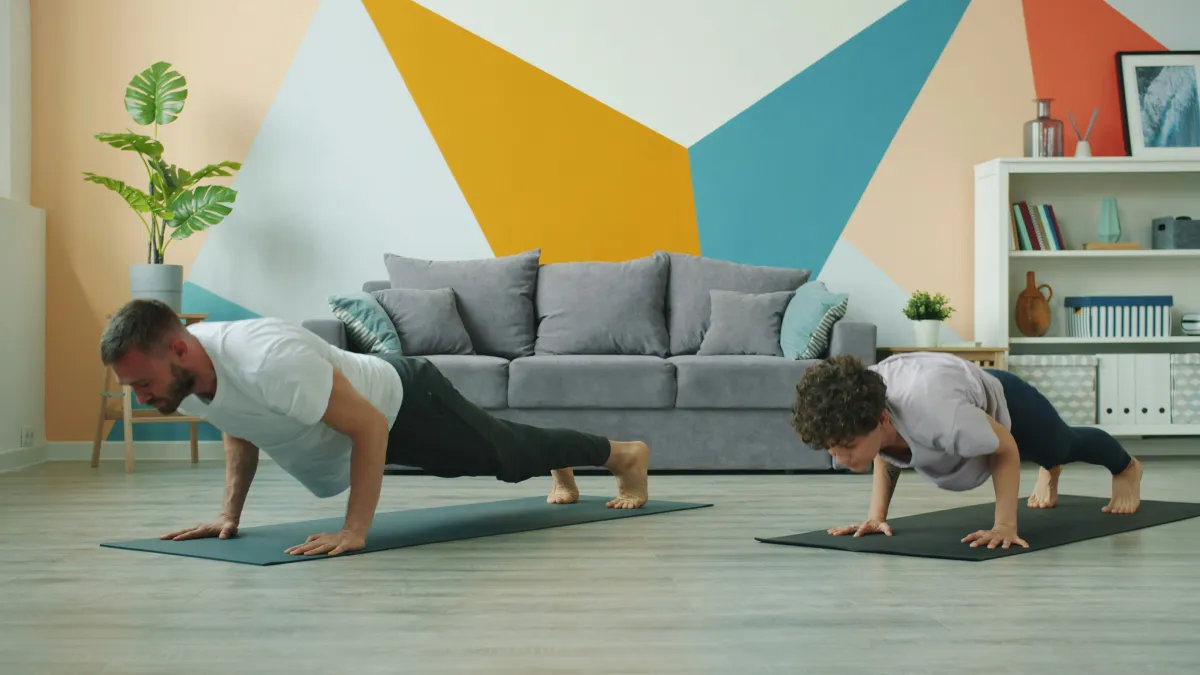
There is a persistent and widely repeated assumption in fitness culture that serious training requires a gym membership. It is worth examining where that assumption truly and consistently comes from, because the evidence does not support it nearly as strongly as the fitness industry would prefer you to believe.
The human body produces strength adaptations in response to mechanical tension and metabolic stress, the two fundamental drivers behind virtually all resistance training adaptation regardless of context. The source of that tension, whether a barbell, a cable machine, or your own bodyweight against gravity, is secondary to the stimulus itself. What drives adaptation is progressive challenge over time applied consistently to the fundamental movement patterns your body is naturally built around. All of that is genuinely achievable without ever leaving the comfort of your own home, regardless of starting fitness level.
Does Bodyweight Training Actually Work?
The short answer is yes, meaningfully so, with one honest caveat.
Bodyweight training produces significant improvements in strength, muscular endurance, cardiovascular fitness, and body composition when performed consistently and with appropriate intensity. A 2017 review in the Journal of Exercise Science & Fitness examining bodyweight resistance training found that it produced comparable improvements in muscular endurance and body composition to traditional weight training in previously sedentary adults over an 8-week period.
The honest limitation is in progressive overload for advanced strength development. With a barbell, progression is simple: add weight. With bodyweight, progression requires manipulating leverage, range of motion, tempo, and movement complexity. It demands more creativity but is entirely achievable. The further you are from your genetic strength ceiling, the more effective bodyweight training will be, which means most people reading this have years of productive training available to them without a single piece of equipment.
References:
- Calatayud J, et al. (2015). Muscle activation during push-ups with different suspension training systems. Journal of Human Kinetics, 46, 49-56. PubMed
- Kotarsky CJ, et al. (2018). Effect of progressive calisthenic push-up training on muscle strength and thickness. Journal of Strength and Conditioning Research, 32(3), 651-659. PubMed
The Fundamental Movement Patterns
Effective strength training is organized around movement patterns rather than individual muscles. Every functional movement your body performs maps to one of five fundamental patterns, and covering all five across a weekly routine is sufficient for comprehensive development.
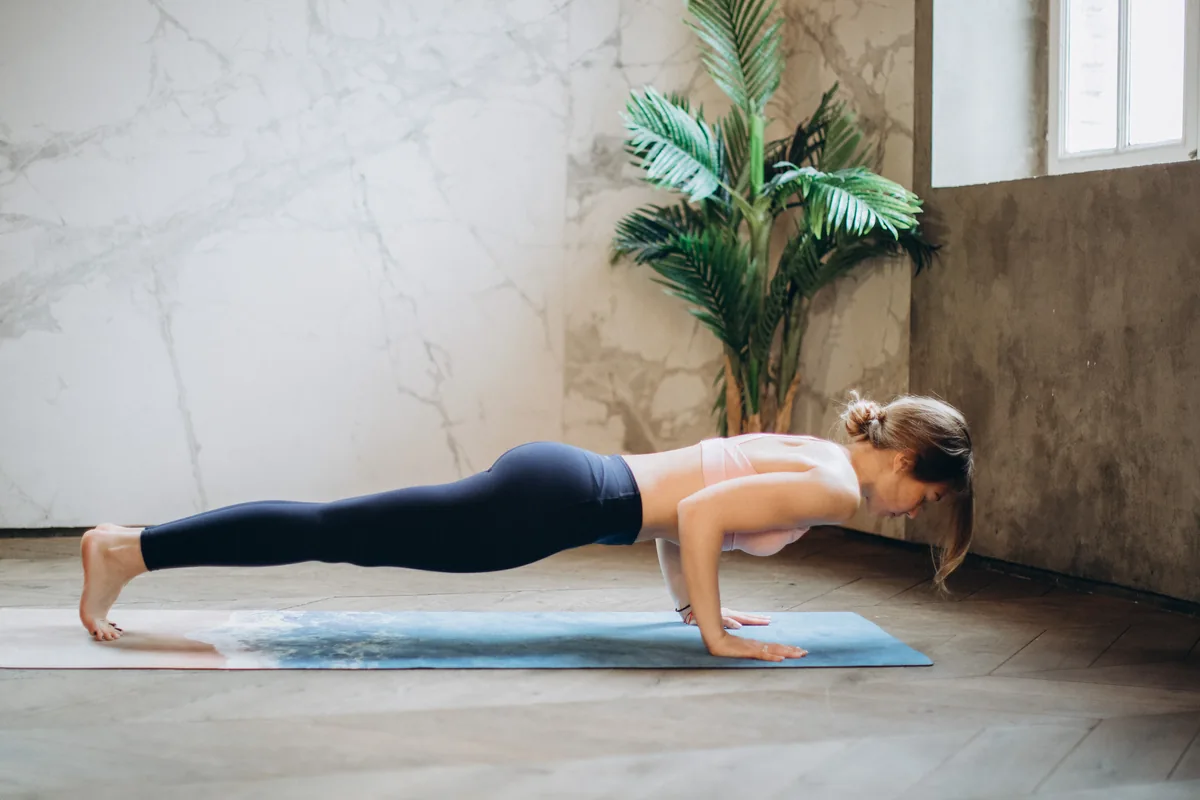
Push covers the chest, shoulders, and triceps. Push-up progressions move from incline (easier) through standard, decline, archer, and eventually single-arm variations. The range of difficulty is wide enough to accommodate any fitness level.
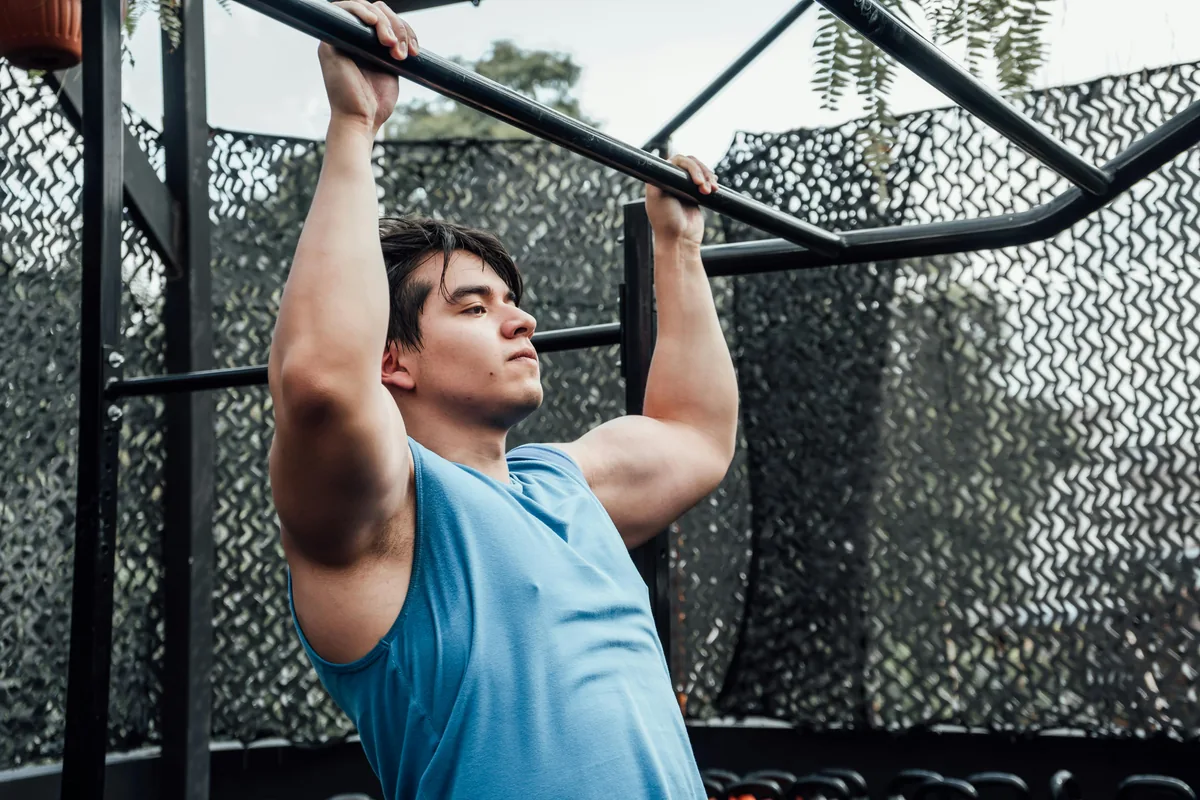
Pull is the most challenging pattern to train without equipment because pulling your own bodyweight upward requires either a bar or a suspension point. This is the one pattern where a small investment makes a meaningful difference.
Squat patterns cover the quads, glutes, and hip flexors. Bodyweight squats are a starting point, but Bulgarian split squats and eventually single-leg squats provide a progression arc that challenges even experienced trainees.
Hinge targets the posterior chain: glutes, hamstrings, and lower back. Glute bridges, single-leg variations, and hip hinges with bodyweight are well-studied and effective at activating the posterior chain without equipment.
Core in functional terms means anti-rotation and anti-extension under load. Planks, dead bugs, and hollow body holds develop the kind of core stability that transfers to all other movements and to daily life, not the superficial abdominal hypertrophy that most core routines target.
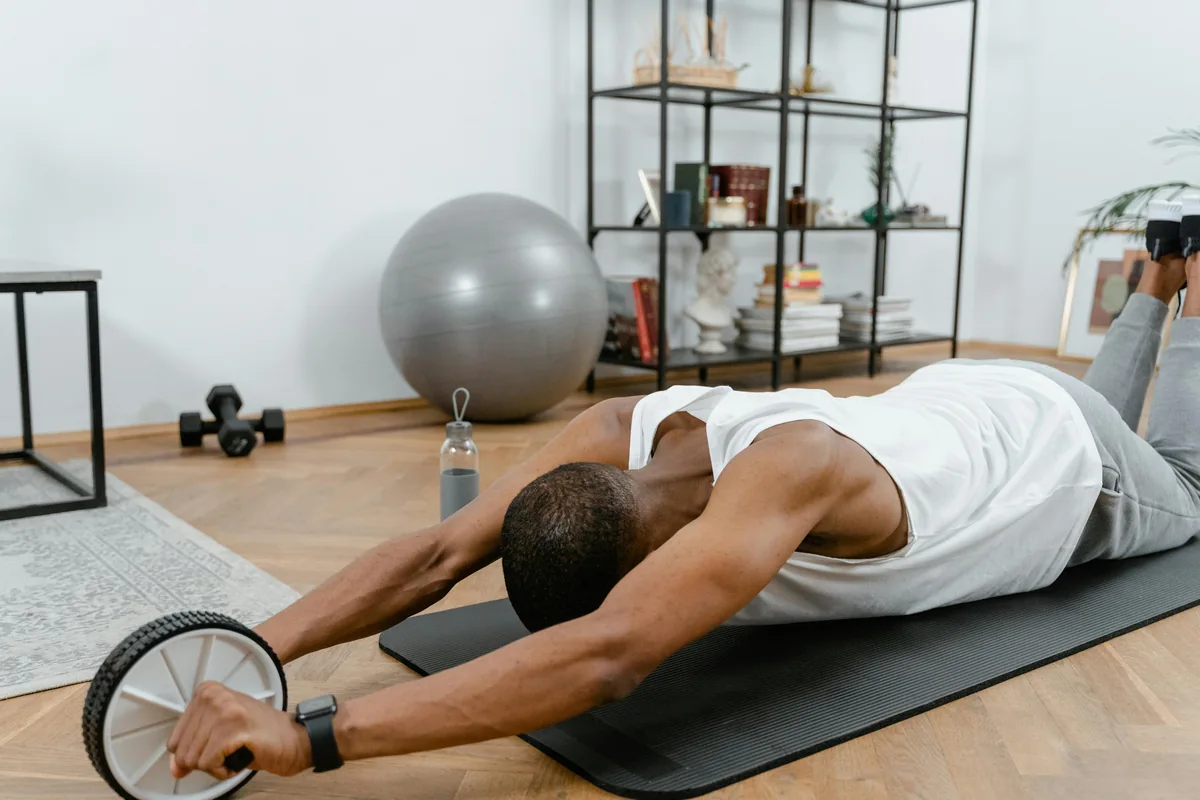
A program covering all five patterns, two to three times per week with adequate rest between sessions, is sufficient for meaningful strength development and the metabolic and longevity benefits that come with it.
Recommended: Watch Before You Start
Getting the movement patterns right before adding difficulty is the most important investment in home training. FitnessFAQs, run by physiotherapist Daniel Vadnal, is one of the most evidence-grounded bodyweight training channels available. This full-body calisthenics overview covers the key patterns this post describes, with clear form cues for beginners through intermediate trainees.
Progressive Overload Without Weights
Progressive overload, the principle that the training stimulus must increase over time to continue producing adaptation, is not optional. Without it, training produces a plateau and eventually maintenance at best. With weights, the progression is straightforward. Without them, it requires deliberate planning.
The main tools for progression in bodyweight training are:
Leverage manipulation. Moving your center of mass closer to or further from the ground changes the effective load dramatically. An incline push-up is significantly easier than a flat push-up, which is easier than a decline push-up. This one variable alone creates a progression arc spanning years.
Range of motion. A squat that goes to parallel is easier than one that breaks parallel. A push-up performed with hands on books that allows the chest to descend below hand level recruits more muscle across a longer range. Expanding range of motion as strength allows is a legitimate and underused progression tool.
Tempo. Slowing the lowering phase (eccentric) of a movement increases time under tension and mechanical stress without requiring additional load. A three-second lowering phase on a squat or push-up produces significantly greater muscle activation than a standard-tempo repetition.
Unilateral progressions. Moving from two-limb to single-limb variations roughly doubles the load on the working muscles. The progression from two-leg squat to split squat to Bulgarian split squat to single-leg squat follows this logic, and represents enough difficulty variation to challenge virtually any fitness level.
Volume. Adding sets or repetitions within a session is the simplest form of overload and appropriate for beginners. As fitness improves, intensity manipulations become more effective than simply adding volume.
Tracking your sessions, even informally, is essential for applying progressive overload intentionally. Without a record of what you did last week, it is easy to repeat the same effort indefinitely and wonder why results have plateaued.
References:
- Schoenfeld BJ. (2010). The mechanisms of muscle hypertrophy and their application to resistance training. Journal of Strength and Conditioning Research, 24(10), 2857-2872. DOI
Cardiovascular Training at Home
Effective cardiovascular training requires nothing more than space and movement, and the research on home-based cardiovascular options is clear.
High-intensity interval training (HIIT), alternating brief periods of maximum effort with short recovery intervals, consistently produces cardiovascular adaptations comparable to much longer steady-state sessions in significantly less time. A landmark study from McMaster University found that 10 minutes of HIIT, including one minute of intense effort, produced similar improvements in cardiovascular fitness markers to 50 minutes of continuous moderate exercise over 12 weeks. The time efficiency argument for HIIT is one of the most replicated findings in exercise science.
Jumping rope deserves more credit than it typically receives in home workout discussions. It elevates heart rate rapidly, improves coordination and footwork, and can be performed in a small space. Research on jump rope training shows improvements in cardiovascular fitness, body composition, and motor skills comparable to jogging, at a fraction of the equipment cost.

References:
- Gibala MJ, et al. (2012). Physiological adaptations to low-volume, high-intensity interval training in health and disease. Journal of Physiology, 590(5), 1077-1084. PubMed
- Trecroci A, et al. (2015). Jump rope training: balance and motor coordination in preadolescent soccer players. Journal of Sports Science and Medicine, 14(4), 792-798. PubMed
A Practical Weekly Structure
The most common mistake in home training is training every day with no structure, leading to burnout, or training sporadically with no clear plan, leading to minimal adaptation. Neither extreme serves the goal.
A three-day-per-week structure is enough to produce meaningful results for most people and leaves sufficient recovery time to maintain consistency over months rather than weeks. Here is a simple framework:
Day A — Push and Core
- Push-up variation: 3 sets to near-failure
- Decline push-up or pike push-up (shoulder focus): 3 sets
- Plank: 3 sets, 30–60 seconds
- Dead bug: 3 sets of 8–10 repetitions per side
Day B — Squat and Hinge
- Bodyweight squat or split squat: 3 sets of 10–15 repetitions
- Bulgarian split squat: 3 sets of 8–10 per leg
- Glute bridge or single-leg variation: 3 sets of 12–15 repetitions
- Hip hinge: 3 sets of 10 repetitions
Day C — Cardio and Pull
- HIIT circuit or jump rope: 15–20 minutes
- Pull-up or inverted row (if equipment available): 3 sets
- Band pull-apart (if bands available): 3 sets of 15
Alternate A, B, and C across three non-consecutive days per week. Progress each movement by increasing repetitions until you reach the top of the target range, then increase difficulty by moving to a harder variation or adding a slower tempo.
A Complete Beginner Session to Follow Along
If you prefer a guided workout while you build the habit, Team Body Project has produced one of the most accessible beginner home workout videos available: low impact, no equipment, 30 minutes. The pace is realistic for anyone returning to exercise or starting for the first time.
Recovery Between Sessions
Training is the stimulus. Recovery is where adaptation actually occurs. A session that leaves you unable to move properly the following day is not better training; it is a recovery debt that reduces the quality of subsequent sessions and increases injury risk over time.
Muscle protein synthesis, the process by which the body repairs and builds muscle tissue, peaks in the 24–48 hours following a training session. Adequate protein intake during this window, combined with sufficient sleep, is what converts the training stimulus into actual physical change. A session without adequate recovery support is a stimulus without the response.
Practical recovery essentials: sleep 7–9 hours per night, consume adequate protein distributed across meals (0.4–0.5 grams per kilogram of body weight per meal works well as a practical target), and avoid scheduling intense sessions on consecutive days for the same muscle groups. Active recovery (light walking, stretching, or gentle mobility work) on off days maintains blood flow to recovering tissues without adding significant stress.
References:
- Churchward-Venne TA, Burd NA, Phillips SM. (2012). Nutritional regulation of muscle protein synthesis with resistance exercise: strategies to enhance anabolism. Nutrition and Metabolism, 9(1), 40. PubMed
The Most Important Variable: Consistency
Home training removes the single largest friction point for most people: commute time. That reduction in friction is not a minor convenience. For many people it is the difference between exercising consistently and not exercising at all, and the research on exercise adherence is clear that convenience is one of the strongest predictors of long-term habit maintenance.
Choose exercises you find tolerable or genuinely enjoyable. Schedule sessions at a consistent time of day. Start with a commitment small enough that skipping feels worse than doing it. These are not motivational platitudes. They are principles derived from behavioral research on habit formation applied to physical activity specifically.
The friction-reduction argument deserves to be taken seriously rather than dismissed as an excuse. Decision fatigue is a real phenomenon, and every additional step between deciding to exercise and actually starting, packing a bag, driving, finding parking, waiting for equipment, is a point where motivation can fail. Removing those steps entirely, by training in the same room you already live in, with equipment that is already set up and visible, removes the decision points where most people’s intentions quietly collapse. This is not a minor psychological trick. It is the single most reliable lever available for improving long-term adherence, which research consistently shows matters more for outcomes than the specific program chosen.
The training stimulus that produces health benefits accumulates over months and years. A modest but consistent home practice maintained for three years produces far greater health outcomes than an ambitious gym program abandoned after three months.
Minimal Equipment Worth Considering
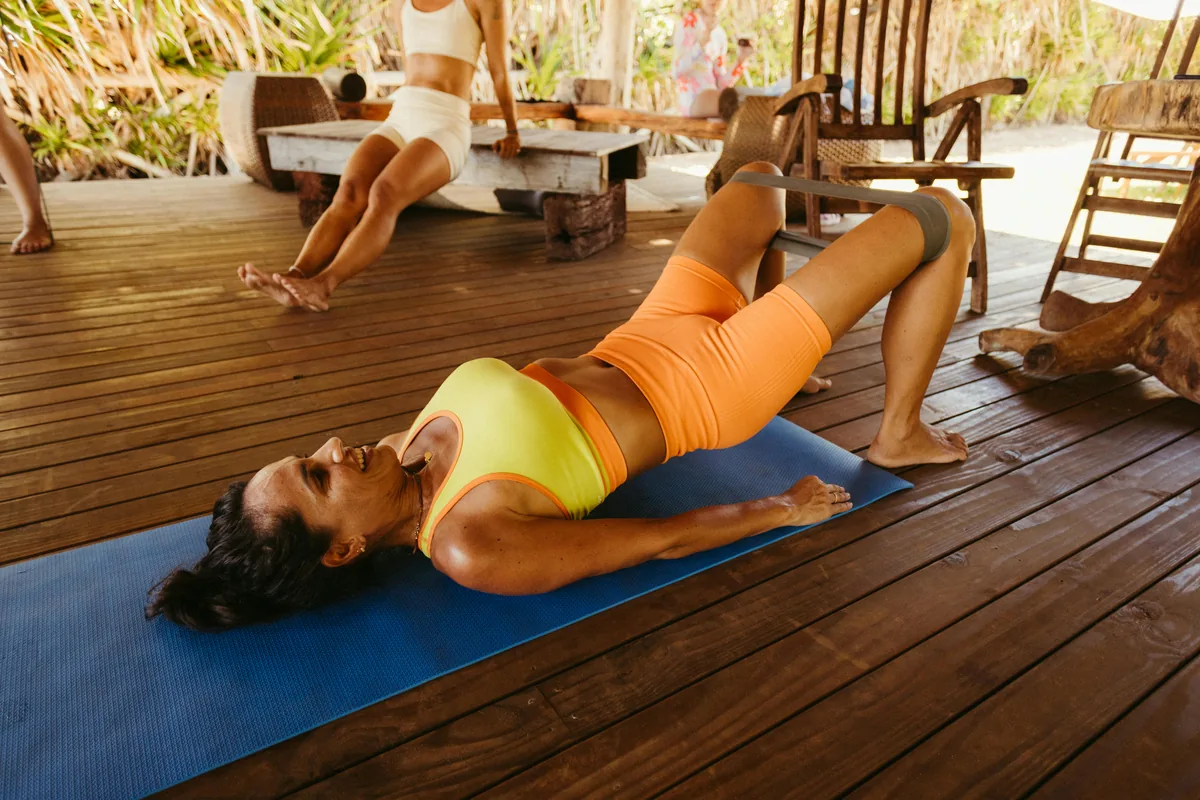
Resistance bands ($15 to $30): The highest return on investment in home fitness. They add variety and progressive loading to pulling, hinging, and squatting movements, and the research on resistance band training shows muscle activation comparable to free weights across most movement patterns.
Pull-up bar ($20 to $40): Solves the pulling problem completely. Doorframe pull-up bars require no installation and open up a wide range of upper body and core exercises that are otherwise difficult to replicate with pure bodyweight.
Foam roller ($25 to $45): Recovery is training. Ten minutes of foam rolling after an intense session reduces delayed onset muscle soreness and improves tissue quality over time. For anyone training three or more days per week, this is a meaningful investment in maintaining training quality across the week.
💪 Two tools that make home training significantly more effective: resistance bands for progressive overload across all movement patterns, and a foam roller for recovery between sessions. Both are evidence-backed and cost less than a single month of gym membership.
Resistance Bands on Amazon → Foam Roller on AmazonCommon Mistakes That Limit Progress
Skipping the warm-up. Cold muscles and connective tissue are more vulnerable to strain, and performance in the first set of a cold session is meaningfully lower than in a properly prepared one. Five minutes of light movement, joint circles, and easier variations of the exercises you plan to perform is sufficient. This is not optional time wasted; it is part of the session.
Training to exhaustion every session. Maximum effort every day is not maximum adaptation; it is overtraining. Leaving one to two repetitions in reserve on most sets produces comparable or better results over time than training to absolute failure, with significantly less recovery demand and lower injury risk.
Ignoring the posterior chain. Most people naturally gravitate toward pushing movements and neglect pulling and hinging. The result is a strength imbalance that eventually manifests as shoulder discomfort, poor posture, or lower back problems. Every push should be paired with a pull; every squat with a hinge.
No progression tracking. Without knowing what you did last session, you cannot know whether you are progressing. A simple notebook or notes app entry after each session (exercises, sets, repetitions, and notes on difficulty) takes two minutes and makes intentional progression possible. People who track their training consistently show better strength and muscle gains over time than those who train by feel, because progressive overload requires knowing what you did before.
Changing the program too frequently. Exercise variety is appealing but works against the adaptation process. Changing exercises every week prevents the nervous system and muscles from developing the specific efficiency needed to produce strength gains. Stick with the same core movements for at least four to six weeks before making significant changes.
References:
- Refalo MC, Helms ER, Trexler ET, Hamilton DL, Fyfe JJ. (2023). Influence of resistance training proximity-to-failure on skeletal muscle hypertrophy: a systematic review with meta-analysis. Sports Medicine, 53(3), 649-665. PubMed
Have a question or a topic you would like covered? Leave a comment below or get in touch.