
If you had to choose a single intervention to improve your health, performance, mood, and longevity all at once, sleep would be the strongest candidate the science has to offer. Yet it remains the most consistently sacrificed variable in modern life, treated as something you do when there is nothing more important to do.
This is a biological error with real consequences. This post covers what sleep actually does, what happens when you consistently fall short, and what practical steps have the strongest evidence behind them.
What Happens in Your Brain While You Sleep
Sleep is not a passive state. It is an extraordinarily active biological process composed of distinct stages, each serving specific functions that cannot be replicated while awake.
During slow-wave sleep, the brain consolidates declarative memories, the body releases growth hormone for tissue repair, and the immune system performs much of its maintenance work.
During REM sleep, emotional memories are processed, motor learning is consolidated, and the brain appears to make creative connections between previously unrelated information.
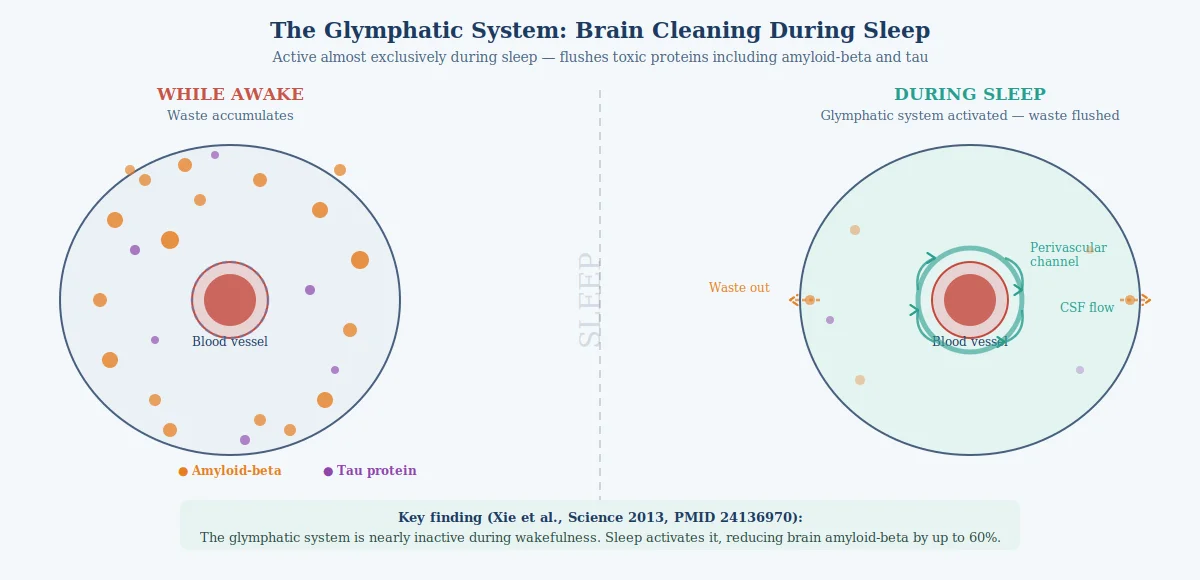
One of the most significant recent discoveries is the role of the glymphatic system during sleep. This network of channels surrounds blood vessels in the brain and is primarily active during sleep. It flushes metabolic waste products, including amyloid-beta and tau proteins that accumulate during waking hours and are strongly associated with Alzheimer’s disease. This discovery fundamentally changed how neuroscientists think about sleep’s role in long-term brain health.
As a biomedical scientist passionate about the engineering of nature, I find this discovery particularly compelling. The idea that the brain has its own dedicated waste-clearance system that only activates during sleep reframes everything we thought we knew about why we need to sleep at all. It is not simply rest. It is maintenance that cannot happen any other way.
If you are having trouble falling asleep, consider calming practices before bed. Scientific evidence consistently shows that mindfulness meditation reduces cortisol levels and anxiety, two of the most common drivers of insomnia. For those with a spiritual practice, prayer can serve a similar purpose.
If these approaches do not resolve persistent sleep difficulties, consult a qualified healthcare professional.
References:
- Xie L, et al. (2013). Sleep drives metabolite clearance from the adult brain. Science, 342(6156), 373-377. PubMed
- Rusch HL, et al. (2018). The effect of mindfulness meditation on sleep quality: a systematic review and meta-analysis of randomized controlled trials. Annals of the New York Academy of Sciences, 1445(1), 5-16. PubMed
🛏️ Two simple tools that meaningfully improve sleep quality: a contoured sleep mask to block light completely, and an ergonomic pillow that supports proper neck alignment throughout the night.
Get Derila Ergo Pillow → Sleep Mask on AmazonThe Consequences of Sleep Deprivation
The research on sleep deprivation is unambiguous and sobering. Even modest reductions in sleep duration, from 8 hours to 6 hours per night, produce measurable impairments in cognitive performance, immune function, hormonal regulation, and metabolic health.
A comprehensive meta-analysis of over 1.3 million participants found that sleeping fewer than 6 hours per night was associated with a significantly increased risk of all-cause mortality. The association was comparable in magnitude to the risks associated with physical inactivity and obesity.
Beyond mortality, chronic sleep deprivation is associated with:
- Increased cortisol levels and systemic inflammation
- Impaired glucose metabolism and increased risk of type 2 diabetes
- Dysregulation of hunger hormones, specifically increased ghrelin and decreased leptin, which drives overeating and weight gain
- Reduced testosterone in men
- Impaired consolidation of memories formed during the day
- Significantly increased risk of accidents, errors, and impaired judgment
References:
- Cappuccio FP, et al. (2010). Sleep duration and all-cause mortality: a systematic review and meta-analysis of prospective studies. Sleep, 33(5), 585-592. PubMed
- Spiegel K, et al. (2004). Sleep curtailment in healthy young men is associated with decreased leptin levels, elevated ghrelin levels, and increased hunger and appetite. Annals of Internal Medicine, 141(11), 846-850. PubMed
Sleep Architecture: What Happens Inside a Full Night
A complete night of sleep is not a single uniform state. It cycles through distinct stages, each serving different biological functions, and the proportion of time spent in each stage changes across the night in ways that have significant practical implications.
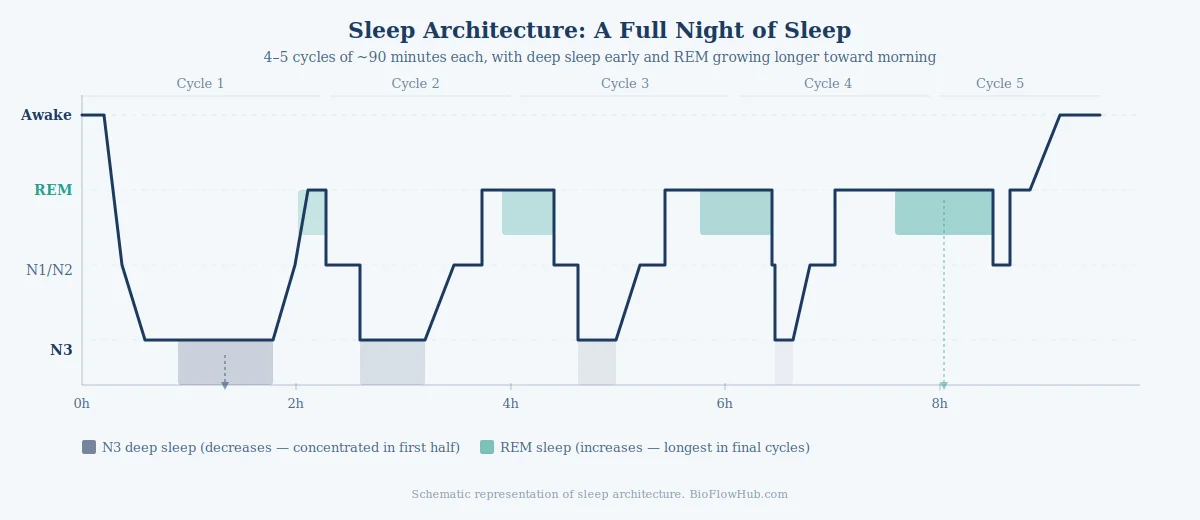
NREM Stage 1 and 2 (light sleep) occupy the transition from wakefulness into deeper sleep. Stage 2 produces sleep spindles, bursts of coordinated neural activity associated with motor learning and memory consolidation. These stages together account for roughly 50% of a full night’s sleep.
NREM Stage 3 (slow-wave or deep sleep) is when the glymphatic system is most active, clearing metabolic waste including beta-amyloid from the brain. Growth hormone secretion peaks during this stage. Physical tissue repair, immune system consolidation, and declarative memory encoding all occur primarily here. Deep sleep is disproportionately concentrated in the first half of the night, which is why the first sleep cycle cut short by an alarm or alcohol represents the largest loss of restorative sleep.
REM sleep occupies a progressively larger proportion of each successive sleep cycle across the night, peaking in the final hours before natural waking. It is the stage most associated with emotional memory processing, procedural learning, pattern recognition, and creative insight. People who consistently sleep fewer than 7 hours lose disproportionately more REM than NREM sleep, which partially explains the mood and cognitive effects of mild chronic sleep restriction beyond simple tiredness.
Understanding this architecture explains why sleep timing matters, not just total duration. Sleeping from 1am to 9am and sleeping from 10pm to 6am produce very different distributions of sleep stages even at identical durations, because slow-wave sleep is circadian-phase dependent and peaks in the early part of the biological night.
References:
- Patel AK, Reddy V, Shumway KR, Araujo JF. (2022). Physiology, sleep stages. In StatPearls. StatPearls Publishing. PubMed
The Circadian Rhythm: Your Internal Clock
Understanding the circadian rhythm is, in my view, one of the most practically useful things you can learn about your own biology. It is not just about sleep. It is about how virtually every system in your body is timed.
The circadian rhythm is an approximately 24-hour internal clock driven by a small region of the brain called the suprachiasmatic nucleus. It responds primarily to light signals from the environment and regulates not just sleep and wakefulness but also body temperature, cortisol release, insulin sensitivity, immune activity, digestion, and dozens of other physiological processes, all of which follow a predictable daily pattern.
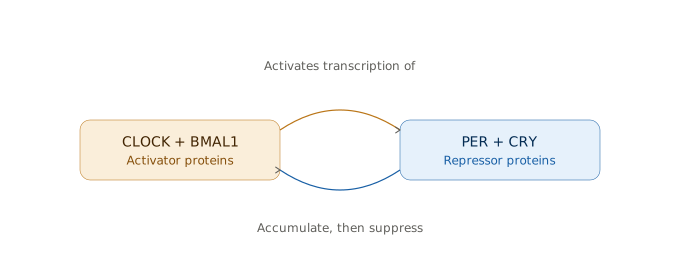
This master clock is not metaphorical. At the molecular level, it is built from a feedback loop of clock genes, most notably CLOCK and BMAL1, which activate the transcription of two other genes, PER and CRY. As PER and CRY proteins accumulate, they loop back and suppress the activity of CLOCK and BMAL1, and the cycle resets roughly every 24 hours.
This same molecular clockwork exists not just in the suprachiasmatic nucleus but in nearly every cell of the body, meaning your liver, your muscles, and your skin each carry their own semi-independent timing mechanism, all of which the central brain clock keeps synchronized through light exposure. This is part of why disrupted sleep affects so much more than alertness: when the central clock and the peripheral cellular clocks fall out of sync, as happens with jet lag or shift work, organs are quite literally working on different schedules from one another.
When the circadian rhythm is aligned with the external environment, these systems work in coordination. Cortisol peaks in the morning to mobilize energy and alertness. Body temperature rises through the day and drops at night to facilitate sleep. Digestive enzymes and insulin sensitivity are highest during daylight hours.
When the rhythm is disrupted, whether by shift work, irregular schedules, late-night light exposure, or eating at the wrong times, these systems fall out of sync. The consequences include poor sleep quality, impaired metabolic function, increased inflammation, mood disruption, and over the long term, significantly elevated risk of cardiovascular disease and metabolic disorders.
Keeping your circadian rhythm stable is therefore not just about sleeping better at night. It is about keeping the entire orchestration of your physiology running correctly.
Light is the most powerful regulator of the circadian clock. Exposure to bright light in the morning anchors your rhythm earlier, promoting earlier sleep onset at night. Conversely, exposure to blue-wavelength artificial light in the evening, from phones, tablets, and LED screens, suppresses melatonin production and delays sleep onset.
Sleep pressure, the other regulatory system, is driven by the accumulation of adenosine in the brain during waking hours. Caffeine works by blocking adenosine receptors, which is why it reduces sleepiness but does not eliminate the underlying sleep pressure that has been building throughout the day.

References:
- Czeisler CA, et al. (1999). Stability, precision, and near-24-hour period of the human circadian pacemaker. Science, 284(5423), 2177-2181. PubMed
- Roenneberg T, et al. (2012). Social jetlag and obesity. Current Biology, 22(10), 939-943. PubMed
Intermittent Fasting and Sleep Quality
One area that receives less attention than it deserves is the relationship between meal timing and sleep.
Eating late at night, particularly large meals close to bedtime, activates digestion and raises core body temperature at exactly the time your body needs to cool down to initiate deep sleep. It also stimulates insulin release and can disrupt the natural overnight decline in metabolic activity.
Intermittent fasting, particularly approaches that consolidate eating to earlier in the day and create a meaningful gap before sleep, has been associated with improvements in sleep quality in several studies. The mechanisms are multiple: reduced nighttime digestive activity, better alignment of the feeding cycle with the circadian rhythm, and reduced inflammatory markers that can interfere with sleep architecture.
A study published in Nutrients found that time-restricted eating, with the eating window ending at least three hours before sleep, was associated with significantly better sleep quality and reduced nighttime waking compared to unrestricted meal timing.
Even without formal fasting, finishing your last meal two to three hours before bed is a practical and well-supported recommendation for improving sleep quality.
References:
- Lowe DA, et al. (2020). Effects of time-restricted eating on weight loss and other metabolic parameters in women and men with overweight and obesity. JAMA Internal Medicine, 180(11), 1491-1499. PubMed
- Sutton EF, et al. (2018). Early time-restricted feeding improves insulin sensitivity, blood pressure, and oxidative stress even without weight loss in men with prediabetes. Cell Metabolism, 27(6), 1212-1221. PubMed
Evidence-Based Habits for Better Sleep
Keep a consistent schedule. Go to bed and wake up at the same time every day, including weekends. Consistency is more important than the specific time you choose. Irregular sleep schedules are associated with poorer sleep quality, increased daytime fatigue, and metabolic disruption.
Manage light exposure deliberately. Get bright light exposure within the first hour of waking, ideally sunlight. In the evening, dim indoor lights and reduce screen use at least one hour before bed.
Keep your bedroom cool. Core body temperature needs to drop by approximately 1 degree Celsius to initiate and maintain sleep. A bedroom temperature of 18 to 19 degrees Celsius is generally optimal for most adults.
Limit caffeine after early afternoon. Caffeine has a half-life of approximately 5 to 7 hours in most adults. A coffee consumed at 3pm still has significant effects at 10pm.
Avoid alcohol as a sleep aid. Although alcohol can accelerate sleep onset, it significantly disrupts sleep architecture, suppressing REM sleep and causing fragmented sleep in the second half of the night. The net effect on sleep quality is negative.
Finish eating at least 2 to 3 hours before bed. As discussed above, late meals raise core body temperature and activate digestion at the wrong time. This is one of the simplest and most consistently underrated adjustments you can make.
Use a sleep mask for daytime rest when necessary. While consolidated nighttime sleep is always preferable, there are situations where a brief rest during the day is unavoidable, particularly after a poor night or during recovery from illness. A contoured sleep mask that blocks light completely, without pressing on the eyes, can meaningfully improve the quality of daytime rest by mimicking the darkness that signals sleep to the brain.

References:
- Irish LA, et al. (2015). The role of sleep hygiene in promoting public health: a review of empirical evidence. Sleep Medicine Reviews, 22, 23-36. PubMed
How Much Sleep Do You Actually Need?
The most common recommendation is 7 to 9 hours for adults, and this range is well-supported by the epidemiological literature. There is genuine individual variation, but the percentage of people who truly function well on 6 hours is far smaller than the percentage who believe they do.
A useful self-assessment: if you feel alert and mentally sharp without caffeine by mid-morning and do not feel the urge to sleep during the day, you are likely getting adequate sleep. If you rely on an alarm clock to wake up, you are probably not.
Sleep and Immune Function: A Connection I Take Personally
As someone whose published research examined neutrophils, the immune system’s first responders, the relationship between sleep and immune function is the part of this topic I find most professionally compelling, and the evidence here is unusually direct rather than merely correlational.
A landmark study exposed 164 healthy adults to the rhinovirus, the virus responsible for most common colds, under quarantine conditions, after measuring their sleep objectively with wrist actigraphy for the preceding week. People who slept fewer than 6 hours per night were over four times more likely to develop a clinical cold after viral exposure compared to those sleeping more than 7 hours, an effect that held regardless of age, stress levels, smoking status, or any other measured variable. This was not a study asking people to recall how they felt. It was a controlled experiment with a real virus, and short sleep alone predicted who got sick.
The mechanism runs through several immune pathways simultaneously. Sleep deprivation reduces the activity of natural killer cells, impairs T-cell function, and disrupts the normal circadian pattern of cytokine release that coordinates immune responses. Even the antibody response to vaccination is measurably weaker in people who are sleep-deprived around the time of vaccination, a finding with direct practical relevance: timing adequate sleep around a vaccination appointment is not a minor detail. The immune system, like every other system covered in this article, runs on a schedule, and sleep is when much of its most important maintenance work gets done.
References:
- Prather AA, Janicki-Deverts D, Hall MH, Cohen S. (2015). Behaviorally assessed sleep and susceptibility to the common cold. Sleep, 38(9), 1353-1359. PubMed
Recovery Beyond Sleep
Sleep is the foundation of recovery, but it works alongside other variables. Physical recovery after exercise is also supported by adequate protein intake, hydration, light movement on rest days, and stress management.
The research on additional recovery interventions like cold water immersion, compression garments, and massage suggests modest benefits for acute recovery, but none of them replace the foundational importance of sleep quantity and quality.
📚 Want to go deeper on sleep science? Why We Sleep by Matthew Walker is the most comprehensive and accessible book on sleep science available. It will permanently change how you think about rest.
View on Amazon →Have a question or a topic you would like covered? Leave a comment below or get in touch.